Monday, December 16, 2013

You Should Know: 5 Ways in which Diaspora Africans are Crucial to Africa’s Growth and Development (PART II)

In the previous post, I discussed two ways in which Diaspora Africans are playing important roles in fostering innovation in Africa. I chose to focus mainly on people and organizations which aim to impact Africa and Africans economically. However, in this second part, I intend to focus on the more social ways in which diasporeans impact their native and adopted countries.


1)      You are learned: and can make significant contributions on the African continent using your expertise. It is no secret that travel is an education unto itself. Exposure to new lands, people and cultures lends a certain kind of sophistication to one’s outlook and will broaden one's perspective in no small way. Whenever I travel to a different country, I am always in awe of just how huge the world really is and how diverse human beings are. I am constantly reminded that there is indeed a whole world out there, outside of my own everyday existence with its peculiar joys and challenges. Elsewhere in the world people are going about their own lives just like I am doing and they are having experiences – working, playing, laughing etc. I usually return refreshed because there is just something about being reminded once again that life is much bigger than the little, insignificant things that we obsess about daily, the world will keep moving even if I get to work late, so what’s the point of stressing about it? But I digress.

In any case, I will not dwell too much on this particular topic because it sort of ties in with #2 from the previous post. There are brilliant, ingenuous and creative people living on the continent as well as in the Diaspora, however, people are more likely to have opportunities to develop their talents when they live in developed nations. This is one of the reasons for what is often referred to as the “Brain Drain” which simply put, is the migration of intelligent and talented people to other nations in search of opportunities. Whether one is pursuing a higher education or learning trades, being in developed countries will often ensure that the person has received a top of the line education with the best tools and technology available in the world today. Therefore, these people will end up well prepared to solve problems in their chosen fields and think “outside the box” when necessary.

The point I am trying to make is that it isn’t just Diaspora Africans who are learned, people on the continent are learned too. However, Diasporeans have the added advantage of being able to view things in a different way due to the new perspectives they have acquired. One only needs to look at the organizations mentioned in the previous post to see how much of an impact one can make after having had the opportunity to see how things are done in other countries. This factor can also have the added effect of making one very passionate about making changes and having an impact on the African continent.

In addition to Non-profits, the influence of Diaspora Africans spans the fields of music, movies, fashion, literature, politics, business, entrepreneurship and any other sphere you can mention. I believe that this rubbing of minds and exchange of ideas will only lead to greater progress in advancing the continent forward in all areas.


Lesly Dube, a UK-educated Zimbabwean, is the CEO of Exploits Solutions, an Events and Projects Managing Company.
(Video courtesy of youtube.com)

2)      You provide diversity in your adopted country: and sometimes a much needed sense of superiority for its citizens (this is really funny). This is often easy to forget given the horror stories you hear about and probably your own experience with visiting foreign embassies while you still lived in your native country. Who could ever forget the good old days of waking up at 2am in order to skip the Lagos morning traffic and arrive at the US Embassy only to stand in for two more hours and hopefully be allowed in that day otherwise, well, you could look forward to repeating the whole process again the next day. And how about the day you finally received the visa or permit (whether it was for a visit, via the green card lottery, to further your education, to attend a conference or for any other reason) did you feel wildly elated? Or did the real thing somehow just not match up to the way you had imagined it would be? In any case, it probably didn’t matter much because you instantly realized that there were preparations to be made for your upcoming relocation to your new country of residence!

Over the years, we have been conditioned to see ourselves as poor, helpless masses that should remain ever grateful for having been offered entry into another country. It is true that for many, leaving their home country for wealthier, more developed nations is sometimes a matter of necessity. We also cannot ignore the fact that these countries are wealthier and more developed mainly because in most cases they have had a succession of great leaders for centuries. A few of these may have even paid with their lives (think Abraham Lincoln) for the higher ideals they fought to implement which in turn had the consequence of keeping their countries moving forward. Given such a legacy and in the grand scheme of things, what excuse would they have not to be wealthy and well-developed?  

By comparison, most African countries are mere babies when one takes into consideration the small number of years during which they have been under self-government as well as the unsolved identity issues and other sources of conflict that Colonial governments created and left behind when they departed. I say all this to say, yes we can do better and yes we are moving forward in many ways, but in the meantime, we have absolutely no reason to feel ashamed. Things will change and the continent will rise.

In the meantime, many of us still find it a matter of necessity to ship on out and live in other societies; a learning experience which is powerful and should by no means be taken for granted. Nevertheless, let us be aware that immigrants provide a source of much needed diversity to societies, not to mention a source of cheap labor and a disciplined and hardworking candidate-pool for menial and low-wage jobs (at least initially). There are very few of us (mostly those from upper class families back home) who can say we have never been fast food workers, cleaners, CNAs, babysitters or taxi-drivers. Even the great Mark Burnett worked as a nanny (or a Manny??) when he first arrived in the United States. And he came from the UK, a country which is respected by other Western nations (unlike most African countries). This is probably why he was able to score a job as a nanny, working for a wealthy family in Hollywood.

We all know that the major cities of the world which have the largest populations and GDP also tend to have a very high level of ethnic, religious, economic, social and every other form of diversity that you can mention. From New York to Los Angeles, from London to Lagos, this is what you will find. As a result, there is always a variety of entertainment, food, culture and other lifestyle factors from which one can choose. Towns and neighborhoods with very little diversity (for example think of a wealthy neighborhood you know) are usually quite boring by comparison. Yes, there may be nice houses and shopping malls but it all tends to look really cold and clinical, you don’t feel the buzz and excitement of lives being lived with joy and laughter, when you are around places like this. So diversity is a wonderful thing and as an immigrant, you are helping your adopted country in this regard, contributing your own unique skills and talents and generally making things more lively and interesting!

On the other hand, this also makes you an accidental ambassador which is something to be mindful of. People will make judgments or cast aspersions on your entire country or even the whole continent based on a single interaction with just you! This happens all the time and can be controlled as we see fit to ensure that more positive notions are created than negative ones…whenever possible.

Mary Shittu (UK-educated) is a Nigerian Fashion Designer and TV show host. 
(Video courtesy of youtube.com)

3)      Lastly, you are brave and courageous: to leave your country of origin in the first place. I remember after having been in my new country for a few months, feeling as though I had just found out how difficult life could really be. It was as though all the so-called “suffering” I had endured in my home country had done nothing to prepare me for assimilating into a new society which can be a harsh, humiliating and sometimes depressing or painful experience.

I have many friends with whom I grew up, whose shadows have never darkened the doorways of the embassies of any western countries. It is just too much stress and they are not willing to be belittled and treated like sub-humans, just to get a visa nor are they willing to relocate anywhere where they will be considered the dregs of society. They have also decided that they will never endure being looked down upon by people who sometimes will not have half the education, sophistication or breeding that they themselves possess, merely because they will be seen as having “come from Africa”. I completely understand their position, especially after having been through the process.

Therefore, we have to admit that choosing to travel out and strive to excel in foreign nations is a very brave and courageous thing to do. While it is nice, given the state of things at home, to be able to do this, it would be even nicer to be able to do it without having to prove yourself over and over again in order to be accorded a minimal amount of the respect you deserve.

So to all my Diasporeans, whether in the middle or otherwise, Starlight sees your greatness and she greatly salutes you from the bottom of her heart!


XOXO,
Starlight.

Starlight First Look: Nolly Silver Screen and Isabelle Akinseye, definitely one to watch.

Friday, December 13, 2013

You Should Know: 5 Ways in which Diaspora Africans are driving Africa’s Growth and Development (PART I)

In today’s post, I have decided to celebrate my African Diasporeans in the Middle and all we do by highlighting some of the often ignored contributions that we make to our home continent. I am sure that there are days when many of us may not think of ourselves as individuals who are impacting the society at large. I hope that reading this post will change that notion in no small measure.

So who is a Diaspora African? I have chosen to adopt the African Union’s has a definition which states that,

The African Diaspora consists of peoples of African origin living outside the continent, irrespective of their citizenship and nationality and who are willing to contribute to the development of the continent and the building of the African Union.” (http://www.audafamericas.org/).

I like this definition because it is broad and leaves very little room for confusion. We can be certain that it encompasses everyone from Taxi-drivers and Home Health Aides all the way to Physicians, Business Executives and other six-figure diasporeans. At first sight, it might seem as though these various groups would have nothing in common but that is not true. In the grand scheme of things, most African Diasporeans (ADs) share a common goal even as they strive for success in their adopted countries and that is: making life better for those back home and improving the continent as a whole. So let’s break down some of the contributions that ADs make:

Africa Rise Expo video showcasing well-known Diaspora Africans as well as rising stars who are making 
their mark on the continent and in the world at large. (Video courtesy of youtube.com)

1)      You are helping the African Economy and improving lives: with the money you send home. Most of us probably don’t think much about the money that we send home to family and friends. I could tell you stories of people I know and how they make it a point to send a little something home to their loved ones on a regular basis even while working at menial and low-paying jobs in their adopted countries. But I won’t because we all know people like these and very likely, as you read this, you might be one of these and you probably don’t think much of it, to you it might just be a normal part of life. By the time you are finished reading this post, you may begin to think differently about your role as a Diaspora African and the considerable power you wield. Consider this excerpt from Adams B. Bodomo’s blog article, “African Diaspora Remittances are Better than Foreign Aid Funds.Read the full article here.

Solome Lemma in her … Blog article … indicates that Africans send home 40 Billion each year, which is far more than the 7.7 Billion that the US sent to Africa as development aid in 2010. Indeed Lemma confirms that between 1960 and 2003 total foreign aid to Africa was only 600 Billion dollars but remittances from Diaspora Africans during that period were double the foreign aid amounts. Already in 2007 according to Lemma, remittance to Africa by Diaspora Africans was 200 Billion US dollars, which is far more than foreign aid to Africa in that year by non-Africans. The latest figures about Diaspora African remittance show that in 2012, despite paying far more remittance fees than most other areas in the world, Africans still sent back home to Africa a whopping 60 Billion dollars. What all this demonstrates is that the more than 30 million Africans outside are remitting far more money to Africa than the development aid funds that are accorded the continent from international donors.” (emphasis mine).
(Adams B. Bodomo, www.modernghana.com)

You may be amazed to find that taken as a group, Diaspora Africans are sending home far more than the total amount of money being given to African countries in the form of grants and aid. Bodomo’s article also goes on to argue the fact that this money is also far more important in leading to direct improvements in the health, happiness and well-being of people back home than is the foreign aid which often finds its way into the hands of irresponsible politicians and looters. Remittances from foreign-based Africans also has the added benefit of not being contingent upon conditions like foreign aid often is, instead, they are gifts of love, freely given to improve the lives of loved ones. This in turn helps the economy by giving people more spending power as well as the ability to set up businesses thereby creating jobs.


2)      You are fostering innovation and development on the African Continent: by making use of the information and insight you have gained from living in a different country and seeing things from a different perspective. A lot of initiatives are being launched on the continent of Africa by diasporeans who have chosen to make a difference either by returning home or by setting up and managing projects remotely. The forms of these contributions are as varied as the diasporeans themselves because we all have different areas of interests and unique talents within each area. There are so many different businesses and organizations being run by ADs and which are driving innovation on the continent but for the sake of time, only a few are highlighted below:

Ruff n Tumble founder, Adenike Ogunlesi discusses her company and doing business in Nigeria.
(Video courtesy of youtube.com)

·         Villages in Action – One of the initiatives of Project Diaspora which is the brainchild of Teddy Ruge, an technology enthusiast and entrepreneur who has launched many start-ups both in the United States and in his native country of Uganda. Villages in Action creates opportunities for people and especially youth who live in rural areas of Africa to showcase their talents in technology and many other areas. The main idea is that their voices are heard and that this is done without the help of international aid organizations.

·         Africans in the Diaspora – AiD began as the brainchild of two women: Solome Lemma (whose blog article, “Redefining Remittances” is referenced in the first part of this post above) and Zanele Sibanda. AiD was also profiled in a previous Diaspora à Vie post.

 ·         FACE Africa – Initially began as Fund A Child’s Education by Saran Kaba Jones after she returned to her home country of Liberia. On finding out how much children were being impacted by the lack of access to clean water, the building of wells has now become the main focus of this Non-profit. Local labor, materials and resources are used in all well-constructions.

·         Ruff 'n' Tumble – A children’s clothing line founded by Adenike Ogunlesi after she returned to Nigeria. The company began with her wanting to make pajamas for her own children and has now grown into a premier fashion brand which uses local fabrics, labor and ingenuity thereby providing jobs to tailors and other artisans. The company now has nine locations in Nigeria with plans to add four more in the first quarter of 2014. 


Stay tuned for Part II of this article.

XOXO,
Starlight.

Monday, December 9, 2013

Starlight Spotlight on Winnie Madikizela-Mandela

Mother of the Nation

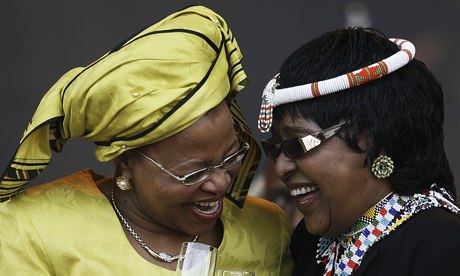
In the wake of the passing away of former South African president, freedom fighter and world-renowned leader, Nelson Mandela, it is no surprise that the thoughts of many have turned to his enigmatic ex-wife, Winnie. One of the top stories of the past few days has been her continued presence in the life of Nelson Mandela even after their divorce which occurred more than twenty years ago and most especially in the days leading up to his final moments. There are pictures of her (completely stealing the show) at a memorial service that was held in honor of her departed ex husband as well as one from a few years back of her sharing a laugh with Mandela’s widow, Graça Machel. Winnie is clearly a permanent fixture in South African politics and in the minds of many whenever they think of Nelson Mandela.

Winnie Madikizela-Mandela at the Memorial Service held for Nelson Mandela
(Image courtesy of www.globalgrind.com)

Winnie met Nelson Mandela in 1957; they were married a year later and had two children before he was sent off to the notorious Robben Island prison in 1962. With her husband in jail and Winnie left to raise two young children on her own, one would have thought that her life was challenging enough. However, to add insult to injury, Winnie also had to deal with the constant harassment of the South African police who had apparently singled her out to be used as an example to help quell any notions the black majority may have had of an uprising. In this way, she was in a way, thrust into the forefront of the fight against apartheid and the struggle for freedom. Whether she liked it or not, she would not be allowed to quietly endure suddenly finding herself in the position of being a single parent while hoping and praying everyday that justice would be done and that her husband would be released.

In my previous post titled, “In Memory of Nelson Mandela (1918 – 2013)” I posed the question following question, “What was it about this man that so captured the imagination of people the world over, that even when he had been in jail for what to my childish mind amounted to an eternity, people were still making movies, writing songs, holding concerts and calling for his release?” Indeed, Nelson Mandela was never forgotten by the general public even as he stayed in prison for almost three decades of his life. The credit for this at least partially, goes to his then wife, Winnie Mandela. After her husband’s imprisonment, she became the face of the ANC and the voice of the disenfranchised black majority in South Africa. She stood firm and spoke against the injustice of the system with great courage and defiance which earned her the love and admiration of ANC followers and the nickname, “Mother of the Nation”. In exchange, she was arrested on many occasions, detained, probably tortured and interrogated, imprisoned in solitary confinement for over a year and eventually banished to an isolated located miles away from her home.

Graça Machel and Winnie Madikizela-Mandela during Nelson Mandela's 90th birthday festivities.
(Image courtesy of www.theguardian.com)

The way events unfold in history and in the lives of those in the public eye can sometimes be surprising, confusing and a little anti-climactic. One example of this was that the very thing that people the world over had wanted – Nelson Mandela’s release from prison, also heralded Winnie Mandela’s fall from public grace. Today, one cannot speak of Winnie without making mention of the scandalous allegations of harassment, kidnappings, tortures and murders committed by members of her personal security detail in which she may or may not have had a hand. It is evident that Winnie did not necessarily agree with or choose to embrace Nelson Mandela’s conciliatory approach to ending the system of Apartheid and creating a more inclusive South Africa.

We may never know exactly what occurred during Mandela’s 27 years of imprisonment to bring about such a radical change in his outlook, seeing as he was himself of a more militant persuasion prior to being locked up. In the same vein, we may never know what really occurred and how much Winnie may have suffered in the years while she was out keeping her husband’s name alive, working with the ANC and continuing the struggle for freedom. This is not to say that there is ever an excuse for murdering another human being however, we are speaking of a nation where the human rights of the black majority were constantly being violated at every turn and by the government, no less! Therefore, we cannot view this situation with the same lenses that we would use if such things had happened in one of the Western countries, for example. It is for reasons like this that I am a firm proponent of having guiding principles and a belief in a something greater than ourselves. Having such an ideology can sometimes be the only thing to stop a human being from becoming abusive once power is attained. We are human after all and all of us are deeply flawed. Therefore, we will always need the influence of the supernatural to rise above our own sometimes dangerous natural propensities.

Winnie Madikizela-Mandela (Image courtesy of www.biography.com)

Winnie and Nelson Mandela were such an “It” Couple in my mind and I loved seeing them together. I am also happy to see that she was still welcome in the family and in the household. This is yet another lesson that can be learnt when it comes to the unfortunate subject of divorce, why have feuding ex-husbands and wives when everyone could be congenial and united and provide an even richer environment for the children? Divorce is sad yes, but something good can come of it, the children could have the positive influence of even more adults if one or both of the individuals remarry and that should be a good thing. As the popular saying goes, “It take a village to raise a child”, so why do adults who should know better sometimes spend so much time resisting the very thing that they probably need the most?


In any case, I have chosen to salute Winnie Mandela today. I am certain that there are still millions like me who have chosen not to look with judgment at her flaws but rather with gratitude at the sacrifices that she also was forced to make in her life and at the fact that she was and still is a model of strong (and a bit scary) African womanhood, loyalty and leadership. Starlight salutes you Winnie, you certainly look great doing it!

XOXO,
Starlight.

Friday, December 6, 2013

In Memory of Nelson Mandela (1918 – 2013)

In loosing Nelson Mandela, the world has lost an iconic leader and a truly remarkable human being. He was not a saint, yes, but how many of us are? Not many, but the absence of a state of perfection should not stop us from reaching for and trying to attain the highest ideals. Mandela fought for freedom; he stood for unity and reconciliation even as he worked for the inclusion of all South African people in the government of their own country. These were causes for which he was prepared to give his life and he led by example and with great dignity the entire way.

As I watched the television coverage of his passing yesterday evening, I could not help but reflect on this great life which touched so many. I heard the President of the United States, Barack Obama say that the first political act of his life had been to participate in an Anti-Apartheid protest. The same is probably true for millions of people the world over, which leads me to understand that Nelson Mandela’s life in its entirety was a gift to the whole world. He did not belong to his family or even to his own people alone, he belonged to us all. His life was a sacrifice.

(Image courtesy of www.nelsonmandela.org)

As a child, growing up in Lagos, I remember learning in primary school about different forms of government. “Democracy” was defined as being a system of government where leaders were chosen “by the people and for the people”. Us kids loved that and would recite it often, not because we fully understood what democracy was but because the definition sort of sounded like one of our fun little nursery rhyme. I also remember learning about “Apartheid”, this being defined as the “ruling of the majority by the minority” with the main example given always being South Africa. Even at that age, something seemed wrong with this form of government. Democracy seemed like the best way to go about things; after all, it was the way we picked our Class Prefects at school. Everyone got to decide who should do the job, whether it was just for the day or for a whole term.

Initially, since I had learnt about African countries achieving independence from colonial masters, I assumed that the situation in South Africa was due to the fact that they were yet to be come independent. Then I learnt that South Africa had in fact gained independence in 1934, long before many other African countries, and this only served to compound my confusion. So why would any one allow such a strange system to exist where a few ruled the many? Who were this minority? Where did they come from? Why did they not let others in? Why did the majority not do anything about it? These were but a few of the many questions I had about Apartheid, which the adults around me at the time were either unwilling to or unable to answer. I surmised that it was not right and wondered how people could just continue living their normal everyday lives when things like this were going on in the world. Why did it not change?

At this time in my life, I had no concept of how racism, segregation and group disenfranchisement could be institutionalized and made part of every day life. I did not understand that people could go to great lengths to seize and hold on to power and that fear could lead them to enact laws that would make sure that certain other people lived a life full of disappointments and uphill battles at every turn. These are all ideas of which I now have a far better understanding since spending over a decade in the United States. When hate is institutionalized, there is very little the average person can do to move out from under the burdens imposed upon him or her, in order to advance.

But Nelson Mandela was no average person was he? Maybe he wasn't or maybe he was, an average person who came to show us what one person can do when he/she chooses not to accept the word “average” as the definitive description of the totality of his/her capabilities. I remember watching a movie that had been made about his life, to be more precise, my parents were watching it and us kids decided to join them. I remember thinking who is this guy? Why is he so famous? When I watched the part about him being imprisoned for 27 years (with hard labor) I thought to myself, "Then, he must be really old!" As a kid, when you meet someone who is 27 years old, why they seem very old to you, how much more hearing of someone who had lived a few decades and then gone on to serve a 27 year jail sentence! I honestly thought at that time that life imprisonment was equal to a 25 year sentence. I don’t know why, but it just seemed like a person's life would be over by then! 

Also, in those days, there was always a “Free Mandela” song being released by an artist and being played at regular intervals on the radio. There were always protests on television and concerts all over the world. There was not freedom song by any of the musical heavyweights of that time that did not mention Mandela and/or Apartheid. What was it about this man that so captured the imagination of people the world over, that even when he had been in jail for what to my childish mind amounted to an eternity, people were still making movies, writing songs, holding concerts and calling for his release? What an extraordinary person!

Popular song from the 80's by Nigerian Reggae Artist Majek Fashek titled "Free Mandela, Free Africa". 
(Video courtesy of www.youtube.com)

When all is said and done, the fact that Nelson Mandela opposed the ostracism of members of the apartheid government and stepped down from his office as President of South Africa after just one term, can almost be called “UnAfrican”. As far as the way things typically go on the continent, a change in leadership is often marked by violence, bloodshed and the complete obliteration of all vestiges of the former regime including the destruction of buildings, property and infrastructure if necessary. Also, with few exceptions, African leaders are usually unwilling to relinquish power once attained. South Africa may still have its problems and it may still be grappling with serious issues affecting the welfare of its citizens, however, it is due to this man’s insistence on unity and inclusion that the entire country did not fall into complete chaos and anarchy like so many other African countries have done.

I could write volumes just about my own personal musings about this great figure of a man. Indeed volumes were written about Nelson Mandela during his lifetime and I am certain that volumes more will be written after his death. The lesson of forgiveness that he has taught me personally is one which I was unable to ignore yesterday, no matter how hard I tried. While reflecting on the fact that he forgave the prison guards who probably beat and tortured him while he was in prison, I came face to face with that fact that I still bore some ill-will towards people who had deliberately wronged me in the past. In my professional life, I have come across a few people who seem to lack any sort of moral compass and who always clearly choose to do wrong rather than stand up for truth. This in a way is sort of the institutionalized formula for success in the corporate world, so it really is no surprise to anyone who’s ever had a job.

However, I am certainly not usually keen on spending any additional time with such people as I try to keep my exposure to poison and negativity to the bare minimum. I can interact in a cordial manner with these denizens of darkness, if this is necessary to accomplish a goal or project, but I see no reason why we should have lunch together afterwards. Therefore, in calling to mind the example set by Nelson Mandela in embracing his jailers and even the Apartheid government in order to accomplish the goal of a free South Africa, I could not help but feel great admiration for the man. I can only imagine how many times he may have found himself seated across a table from an enemy who hated everything he stood for and who was completely unapologetic about the wrongs committed against him. Yet, he chose to rise above all that with dignity and humility that gained him the respect and admiration of his enemies and the love of billions around the world.


I solemnly promise to work on myself with regards to working with and reaching compromises with people who appear to be morally bankrupt. I certainly have as yet suffered no wrongs that would even begin to come close to what Nelson Mandela has lived through and so forgiveness should come at least as easily to me as it did to him. Therefore, it is with great gratitude that I reflect on the life of this great man, given as a gift to us all, to learn from and hopefully to become better people. I salute you, Great Madiba for the countless lessons your life has taught me. Rest in Peace. We will never forget you!

XOXO,
Starlight. 

Monday, December 2, 2013

Starlight Spotlight on Chimamanda Ngozi Adichie

Half of a Yellow Sun” Movie, 2013


Chimamanda Ngozi Adichie is a Nigerian writer, born and raised in Enugu (Eastern Nigeria). She was raised in an upper middle class home and developed a love for writing at a very early age, she wrote her first story at the tender age of five. She attributes her love for literature to the fact that she grew up in a very literary household and read a lot of books during her formative years, her father is an academic.

Chimamanda Ngozi Adichie 
(Photo courtesy of www.classicsoulradio.org)

At the age of 19, she left Nigeria after a little over a year of Medical School to further her studies in the United States. She received a Bachelor’s degree in Political Science from Eastern Connecticut State University and then when on to receive two Master’s degrees, one from John Hopkins University and the other from Yale. Her first novel, “Purple Hibiscus”, was written during her senior year at Eastern Connecticut State University and released four years later in 2003.

Half of a Yellow Sun” was her second novel. Chimamanda has also published a collection of short stories titled, “The Thing Around Your Neck” and her most recent work is a third novel titled, “Americanah”. I have been a fan of Chimamanda’s ever since a friend of mine who had known her at Drexel University (where she studied for her first two years in the United States), told me about her. She is a breath of fresh air, a literary mind and an intellectual in a world where today’s youth are increasingly obsessed with pop culture flash and such superficial subjects as the lives of celebrities. I had often wondered where we would find the next wave of African intellectuals and who would be the Chinua Achebes, the Wole Soyinkas, the Camara Layes and the Kwame Nkrumahs of our time. Thankfully, I did not have to despair for long because Ms. Adichie came on the scene where she swooped down and saved the day! 

Chimamada Ngozi Adichie, The Danger of a Single Story, TED Talks (Video courtesy of www.youtube.com)

Among the many things that Chimamanda does such as working on her craft, holding book signings, doing interviews for various media outlets and more, she still finds the time to give back. She runs a yearly writing workshop in Lagos, Nigeria where she provides guidance, inspiration and mentoring to a whole new generation of up and coming Nigerian writers. She truly is a jewel of inestimable value.

Therefore, my joy knew no bounds when I discovered that her second novel, “Half of a Yellow Sun” was recently made into a movie, starring notable and highly accomplished actors Chiwetel Ejiofor and Thandie Newton in the leading roles! Hurray!! Although Chimamanda has received dozens of awards and honors since the genesis of her writing career, I feel that having one of her books made into a movie is huge forward leap towards the author’s transition from being well-known and respected in the literary world to being discovered by a more mainstream audience. Let’s face it, the majority of the us will never be writers or members of the literary intelligencia, but anyone can watch and enjoy a movie. I am really excited that her work is being introduced to a whole new demographic, and a far more diverse one.

Half of a Yellow Sun” centers around events surrounding the Biafran war as the characters in the novel experience it all from varying view points. It is a tale of violence, of terror, of death, sorrow and loss. However, it is also a tale of love and humanity and all the things that make up our common experience as citizens of planet earth (you know, things like infidelity and such, a common denominator in the lives of women the world over). Therefore, even though Chimamanda goes to great lengths to provide historical context for the events in her book, she never looses her readers by weighing us down with boring facts and figures.

"Half of a Yellow Sun" Movie Trailer, TIFF (Video courtesy of www.youtube.com)

One thing that I find very fascinating about the casting of Chiwetel Ejiofor in the leading male role is that his parents actually fled to the United Kingdom from Nigeria when the Biafran war broke out. He also unfortunately lost his father in a car accident in Nigeria, years later when the family returned for a visit. Therefore, there is no doubt that his personal experiences of such tragedy and loss will find expression in his interpretation of the script in this role. Life can be cruel, but this might be one of those instances when one might say that even our most difficult experiences can prepare us for a great destiny. Being no stranger to hurt and disappointment myself, I would say that I believe this to be true, as long as one does two things:

  • Pick yourself back up and continue pushing forward.
  • Learn the lesson or as Iyanla Vanzant would say, “Do the work”.

Half of a Yellow Sun” was screened at this year’s Toronto International Film Festival (TIFF) and will be having many other screenings in the coming months. This movie is Biyi Bandele’s directorial debut and it stars other amazing talents in supporting roles including: the very beautiful Anika Noni Rose, one of Nigeria’s best actresses of today Genevieve Nnaji and legendary songstress Onyeka Onwenu (whom I love and completely adore). Check it out folks, but for those who have read the novel, don’t have high hopes of it being faithful to or as good as the book. Movies based on books rarely are and this one is no exception. Three cheers for Chimamanda! Starlight salutes you!


XOXO,
Starlight.

Saturday, November 30, 2013

Starlight Spotlight on Chiwetel Ejiofor

Oscar Buzz for “12 Years a Slave”

Although this man needs no introduction, I will nevertheless go through the motions for the benefit of those who (gasp!!) may not know him. Chiwetel Ejiofor is a British actor of Nigerian descent. His parents fled Nigeria during the Biafran war to seek stability and safety in England and they worked very hard to give Chiwetel and his 3 siblings access to the best possible education and opportunities in their new country. In 2002 interview with The Telegraph, explained it this way,

"I am forever grateful to them," Chiwe says. "My family was incredibly worried by the nature of aggression towards people with a different skin color. They worked hard to make sure we weren't in an environment that could easily lead to us being thrown into a cruel underclass of society, something they witnessed happening all around them. They were terrified about what this country would do to their children." (The Telegraph, http://www.telegraph.co.uk). Read the entire article here.

Chiwetel has had a fantastic career in acting, scoring major roles in several blockbuster films over the years. Some of these include, “Amistad” (1997), “Kinky Boots” (2005) and one of my favorite movies in the whole world, “Love Actually” (2003). However, his most recent work in the movie, “12 Years a Slave” is being touted as the role of his lifetime. There are even strong opinions being expressed about him being a strong contender to be honored with the Academy Award for Best Actor at next year’s Oscars.

Chiwetel Ejiofor on the couch with The Queen (whom I love and adore!!) on The Queen Latifah Show.
(Video courtesy of The Queen Latifah Show and www.youtube.com)

While preparing for the role, Chiwetel took a tour through Savannah, Georgia and participated in activities like picking cotton, in order to get a better idea of some of the work that slaves did back in the 1800s. He also got to see a wall to which slaves were often chained after they came off the ships from Africa. Chiwetel connected deeply to this experience especially when he was told that Igbo slaves from Nigeria were among the groups brought into the United States through that location. Chiwetel’s family is of Igbo origin, the tribe that was also most affected during the Biafran war (hence the decision to relocate to England).

By all accounts, “12 Years a Slave” is one of the year’s best movie but this is not surprising because the movie’s director, Steve McQueen appears to have succeeded in assembling an uber-talented cast. Aside from Ejiofor, the cast also includes Brad Pitt and Alfre Woodward (whom I love and adore!!!). It is quite apparent that these actors worked very hard and cared very deeply about giving a powerful on-screen performance in order to do justice to the story and honor Solomon Northrup’s life and legacy (the movie is based on his memoir of these true life events.)


Now we have all been taught in History class that thousands of free blacks were kidnapped during that era and resold into slavery. However, it is not often that we get the opportunity to see such experiences adapted into a blockbuster movie for the edification of the general public. For this reason, special thanks go out to Steve McQueen for not allowing the multiple challenges he must have faced to stop him from making this movie. It is a story that needed to be told and told to a mainstream audience, not an Indie one (nothing against Indie audiences, please don’t send me hate mail! I love Indie films, read my blog!). So thanks Mr. McQueen, for being a voice to those who could not make themselves heard. We salute and appreciate you!

XOXO,
Starlight.


Friday, November 29, 2013

Starlight Movie Review: “Kirikou and the Sorceress” (Animation, French language)

Cuteness Quotient – High, Nipple Quotient…ahem...Very High

To say that this film has one of the cutest main characters you will ever see would be putting it very lightly. Kirikou is adorable, cute and very brave. He is the son that every mother wishes for; the film begins with him demanding to be let out of his mother’s belly and then proceeding to crawl out by himself, after which he disconnects the umbilical cord with a decisive yank. This bit of hilarity decidedly sets the tone for the entire film as Kirikou immediately takes an interest in the problems of his village and bravely goes to work trying to resolve them even at the risk of mortal peril.

“Kirikou and the Sorceress” was written and directed by Michel Ocelot in 1998. Okay, so the film is several years old, but that does not stop the magic! In fact, it only enhances is, which I guess is why it is being shown at the African Diaspora International Film Festival, 2013. I am delighted that this movie continues to be introduced to new audiences as it is entertaining both for children and for adults. I certainly enjoyed every minute of it.

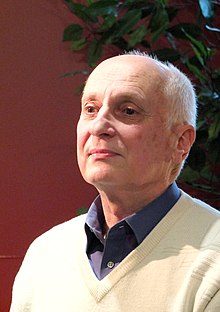
Michel Ocelot
  (Image courtesy of wikepedia.org)

Michel Ocelot is a renowned European writer, storyboard artist, character designer and director. He was born in France but spent his childhood in the West African country of Guinea before returning to his birth country during his teenage years. Now a septuagenarian (he turned 70 this year), Michel has created several highly-acclaimed animated films but “Kirikou and the Sorceress” was by far his break-out work and the one that got him world-wide fame…and a fair amount of notoriety as well. You know what they say; every rose has its thorns. This brings us to the subject of the…ahem...nipples.

“Kirikou and the Sorceress” is set in a West African village where the women (and men, but who cares about them, right?) are bare-breasted, in other words, completely nude from the waist upwards. By now, we’ve all seen video footage taken by cultural anthropologists of African and (non-African) tribes in certain parts of the world that have remained relatively untouched by Western civilization, where this is the regular mode of dressing. To people who live in this way, bare-breasts are a normal part of life and not something that arouses wild animalistic sexual urges like they do in the West. Western cultures are completely obsessed with boobs, which is why breast augmentation via plastic surgery is a 10 billion-dollar industry in the United States alone.

Here’s an excerpt from a Wikipedia article about this film which outlines the reaction of a few western countries to the abundant “northern exposure” contained in “Kirikou and the Sorceress”:

While already a household name in much of continental Europe, (…) his success in the more conservative markets of the United Kingdom, United States and Germany has been restricted by a mixed reaction to the realistic and non-sexual, but nevertheless omnipresent nudity in his breakout film Kirikou and the Sorceress. Although all of these countries' boards of film classification have approved it as being suitable for all ages, cinemas and TV channels have been reluctant to show it due to the possible backlash from offended parents.” (Kirikou and the Sorceress, Wikipedia) (Emphasis, mine).

What can one say to this other than, “Chill out people! Stop being so uptight! Your kids have seen far worse things! With all the sexual innuendo they are constantly being bombarded with on television, they probably know more about sex and the female anatomy than you do! Besides, the nudity in Kirikou and the Sorceress is far from being sexualized, it is very innocent really, just the way God intended it when Adam and Eve were in the garden. So relax!”

(Excerpt from "Kirikou and the Sorceress" courtesy of youtube.com) 

All joking aside, there are many lessons to be learnt from this film. For example, Kirikou finds out (after going on a dangerous quest to meet a wise old man), that the Sorceress (Karaba) is wicked to the villagers because she suffers from terrible personal pain herself. How often have we come across this in life, for instance, parents who hurt and damage their children because they themselves are living with the pain of hurts inflicted on them as kids? A man who does not know how to love a woman because he has never experienced love himself? Young girls who cannot love themselves because they were abused as children? Yes, a great deal of pain is often inherent in the human condition. Rather than blame the person, sometimes it might be worthwhile to look deeper and try to find the root-cause of the problem because then, we would stand a greater chance of finding a solution.

The film ends with a very surprising and unexpected twist, do not for one second assume that you know what is coming because what happens at the end is quite shocking. Okay, maybe I’m being a tad dramatic but it is a great film. Also, the soundtrack features none other than the great Senegalese African treasure: Youssou N'Dour. If this is not a reason to see this film then I don’t know what is. Though originally done in French, this film is available for viewing online with English subtitles. There might be English versions out there too. 10 stars and 10’s across the board from me. Spectacular!

Thursday, November 28, 2013

Starlight Movie Review: "Stateless" (Documentary Film)

Lies and Threats and Beheadings...and the UNHCR, Oh My!!! 

The documentary film "Stateless" is my first pick from this year’s African Diaspora International Film Festival (ADIFF). It is the latest project from Scott Erlinder, a Chicago-based filmmaker and his wife Ginger Scott-Erlinder.

(The creators of the documentary Stateless spoke April 12, 2013, at the Center for the Visual Arts after a screening of the film: Scott Erlinder, Mutuyimana Manzi, project editor Priya Yavagal, and Ginger Scott-Erlinder ’87. Courtesy of stories.illinoisstate.edu)

Now for a little background info: On different occasions during the last few years, the Office of the United Nations High Commissioner for Refugees (UNHCR) has deliberated on evoking the cessation clause which would essentially end the refugee status of Rwandans living in other countries. This has been at the behest of the Rwandan government which has been petitioning the UNHCR since 2002 to bring its citizens home. After several meetings, it was finally decided that as of June 2013, Rwandans who had left between 1959 and 1998 should return to their country of origin because the conditions of political instability and genocides which had caused them to flee were no longer in existence. 

The other side of the coin is that many refugees are unwilling to return to Rwanda due to the oppressive government now in place which uses violence and intimidation tactics to suppress opposition. This fear and unwillingness to return, combined with the cessation clause has now caused many Rwandan refugees to become “stateless”, which is where the film gets its name. Obviously, I am giving an abbreviated version of the story but the events surrounding this situation have been covered extensively in many online articles including this one.

Right now I know what you are thinking, documentaries are usually long and boring especially when they are about governments and the United Nations and dry subjects like that. Initially, I felt the same way and tried to come up with excuses not to watch this film. However, having now seen it I can tell you that your reluctance is completely unfounded, at least as relating to this particular documentary.

First and most importantly, the entire film including opening and closing credits will only take up a mere 46 minutes of your time. This is commendable. Secondly, the narration is done in a very engaging manner that is easy to understand. This combined with the footage will keep you riveted for the entire three-quarters of an hour. Thirdly, there are scenes that show beautiful streets, buildings and homes which portray a side of Africa that few in the West ever get to see. Fourthly, there are beautiful songs included in the movie soundtrack. All these make the documentary far easier to view than most, you will agree, no awkward silences and people crying in front of the camera as you might expect, considering the sad subject matter. Well that’s Africa for you; we always find a way to smile through the pain.

(Image courtesy of http://www.theeastafrican.co.ke)

But what made this film even more fascinating, is the amount of drama! You didn’t think there’d be drama involved in anything that wasn’t a reality show about housewives did you? Well, let me break down a few of the highlights:

  • Scott Erlinder could not even set foot in Rwanda. Why? Because this might have endangered his life. You see, aside from the fact that his movie is calling BS on everything the current Rwandan government has said about how awesome things have now become in the country, another family member of his, his brother Peter, is hated by the same government for the work he did on the International Criminal Tribunal on Rwanda. Read more in this article. Drama!
  • Scott made the movie by sending cameras to Rwandans and asking them to record footage and tell their own stories of the situation on ground. It was a very risky thing to do as is evidenced by the fact that one of the Rwandans who helped with gathering footage for the film (Mutuyimana Manzi, shown in the first picture above) is now living in the United States. Why? Because after his role was discovered, death threats were issued and attempts were made on his life. Scott and Ginger Erlinder then went into action and helped bring him into the US. Read more in this article. Drama!
  • The film is quite graphic at times and there are pictures of people who have suffered some violent and barbaric form of violence, including beheadings. These are things which one would have hoped were part of a bygone era in African history but sadly, nooooo. Watch the entire film here. Drama!
  • There are interviews with all sorts of credible sources, including former highly placed government officials of the current regime who are now living in exile! As the film asks, “What does that say about the Rwandan government?” There are also several accounts of people being brought up on false charges and imprisoned without trial and sometimes even murdered. The main victims here are usually members of the opposition and journalists who have written anything that is in any way critical of the government. Once again, weren't you hoping that as a continent we were past such shenanigans? Sigh. Watch the entire film here.


Sadly, this is the situation that most Rwandans are being forced to return to as a result of the UNHCR’s cessation clause. In the spirit of Thanksgiving, I am thankful among other things, for the fact that both my adopted country and my country of origin are stable and peaceful by comparison to countries like Rwanda and the Democratic Republic of Congo. We should continue to pray for Africa in general and countries like these in particular, that they will get through these trying times and one day emerge strong nations with stable democratic governments which truly protect and serve their citizens. 

Until then, thanks to films like “Stateless”, we can stay informed about the plight of those less fortunate than we are, through no fault of their own. From me, this movie get's 10 stars and 10's across the board. It can be viewed online at nyadiff.org. Watch it now.

XOXO,
Starlight.